
Bladon Delivering Hydrogen Future with Loughborough University
Bladon announced an R&D programme with Loughborough University to advance hydrogen combustion for microturbines, targeting ultra-low emissions.
Bladon announced on 3 November 2021 that it had entered a research and development programme with Loughborough University to advance hydrogen combustion for its microturbine generators. The work was aimed at moving the technology toward 100% hydrogen operation while maintaining ultra-low emissions, building on the multi-fuel flexibility already built into Bladon's platform.
A national facility for net zero research
The programme was conducted at the National Centre for Combustion and Aerothermal Technology (NCCAT), a facility established to support the UK's progress toward its net zero carbon targets. Funding for the collaboration came from a partnership spanning the Aerospace Technology Institute, the Department for Business, Energy and Industrial Strategy (BEIS), Innovate UK, Rolls-Royce and Loughborough University itself, reflecting the breadth of interest in cleaner combustion technology across the aerospace and energy sectors.
By combining Bladon's own expertise in micro-combustor design with the specialist test and research facilities at NCCAT, the two organisations set out to accelerate development work that would otherwise have taken considerably longer for either party to pursue alone.
Building on a modular combustor architecture
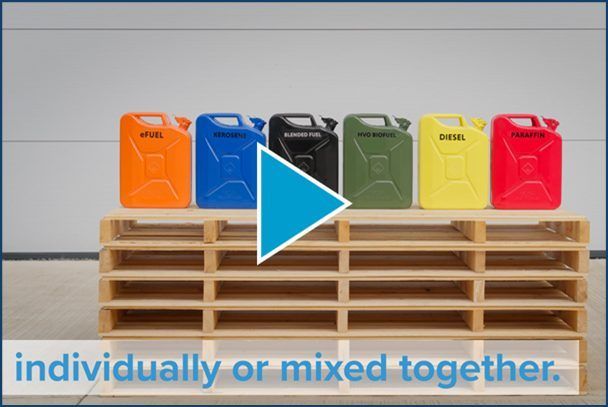
Central to the programme was Bladon's modular combustor architecture, which the company identified as the key enabler for adapting its microturbine generators to run on hydrogen. The same architecture already underpinned the multi-fuel capability of Bladon's existing engines, which were at the time achieving a combustion process measured at 99.9% efficiency, and emissions performance already well below the EU Stage V limits set for off-highway engines.
That existing efficiency and emissions baseline gave Bladon and Loughborough University a strong starting point for the hydrogen work: rather than redesigning the combustion system from scratch, the programme focused on adapting a proven, modular design to a new fuel with very different combustion characteristics.
A demonstrator announced for 2022
At the time of the announcement, Bladon said the partnership was working toward a commercial goal of producing a microturbine hydrogen demonstrator during 2022, intended to give customers a tangible sense of the technology's direction of travel. That target was a forward-looking statement made in November 2021 about plans for the following year, rather than a claim about a product that existed at the time. Hydrogen operation for Bladon's microturbines has continued to be an area of ongoing development since.
“NCCAT is designed to help the UK meet the net zero carbon challenge across several key areas in the UK. We are absolutely delighted to be working in partnership with Bladon Jets to realise their commercial goal of producing a microturbine hydrogen demonstrator in 2022”
“Our microturbine generators are clean now and they're going to be zero carbon. The microturbine generator is already a truly innovative game-changer and through our work with Loughborough University we will have a hydrogen demonstrator to show our customers later in 2022.”
Why hydrogen matters for distributed power
Hydrogen combustion is widely seen as one of the most promising routes to zero-carbon distributed power generation, particularly for sites where grid connection is impractical or uneconomic. For a manufacturer already built around fuel flexibility, adding hydrogen to the list of fuels a single engine platform could run on represented a natural, if technically demanding, extension of Bladon's existing approach to multi-fuel microturbine design.
This article is part of the Bladon archive and reflects the position at the date of publication.