
Blog
Where the money actually goes at an off-grid tower site
Tower power is usually budgeted as a fuel line, because fuel is the part that is visible. The costs that move the total are the ones attached to sending a person to the site.
The microturbine genset that replaces diesel on off-grid and bad-grid sites. Up to 90% service cost saving, a 30 to 50 percent fuel cost saving from running cheaper fuels such as kerosene, and a 45,000 hours design life.
Basis: brochure case studies. Switching a site from diesel to a kerosene and heating oil mix cut fuel cost by 35 percent, and a site with reduced fuel theft cut operating cost by 50 percent.
Diesel generators serve 30 million sites worldwide with a capacity of 500GW, and the fuel and service bill behind them dwarfs the purchase price. That recurring cost is what the microturbine genset is designed to remove.
of fossil fuel consumed by diesel generators annually
replacement value of total generator fleet
released into the atmosphere each year by diesel generators
annual expenditure on diesel fuel
Source: International Finance Corporation (IFC) - Data from 167 developing countries
A microturbine genset costs more to buy than a diesel unit of the same rating. It costs less to own, because almost everything that makes a diesel genset expensive after year one is designed out: the monthly service visit, the oil, the fuel bill and the mid-life rebuild. This is the argument that wins in the procurement spreadsheet.
Up to 90% service cost saving
30 to 50 percent fuel cost saving (Basis: brochure case studies. Switching a site from diesel to a kerosene and heating oil mix cut fuel cost by 35 percent, and a site with reduced fuel theft cut operating cost by 50 percent.)
Roughly twice the life before replacement capex
No oil changes, and blended fuel has no resale market
Model your diesel price, run hours, service call-out cost and fuel theft losses, and see the seven-year position for your own sites. You can download the result as a branded payback report or ask an engineer for a site-specific assessment.
The four ways operators power an off-grid or bad-grid site, compared on the five things that decide the cost of running it.
Compared for off-grid and bad-grid prime power at 10 to 40 kW.
| Criterion | Diesel genset | Solar and battery hybrid | Fuel cell | Bladon microturbine |
|---|---|---|---|---|
| Servicing & life | Disadvantage. Service every 250 to 500 run hours; 15,000 to 25,000 hour life | Disadvantage. Battery replacement every few years, plus servicing the diesel genset it still relies on | Disadvantage. Stack replacement required within the design life under continuous prime duty | Advantage. Annual service, 1 visit/yr; 45,000 hour life |
| Fuel flexibility | Disadvantage. Diesel only | Disadvantage. No fuel flexibility of its own; tied to whatever the backup genset burns | Disadvantage. Single fuel, high-purity hydrogen or methanol | Advantage. Multiple fuel types and blended fuels incl. HVO; H2 and gas in development |
| Emissions | Disadvantage. Particulates, NOx and soot | Matched. Clean while generating, and the backup genset it relies on still emits | Advantage. Zero emissions at point of use | Advantage. Exceeds EU Stage V emissions limits; near-zero soot / PM |
| Noise & vibration | Disadvantage. 75 to 90 dB(A) at 1 m, with vibration | Matched. Silent on solar, and the backup genset it relies on is not | Advantage. Near silent | Advantage. MTG12 60 dB LPA at 10 m; MTP40 60 dB(A) at 7 m and 85 dB(A) at 1 m (design target, not yet verified by test); minimal vibration |
| Operating cost | Disadvantage. Diesel only at the diesel price, frequent service visits, exposure to fuel theft | Disadvantage. High capital cost, sized for worst-case conditions, and still buying diesel for the backup | Disadvantage. Hydrogen supply and logistics cost at remote sites | Advantage. Up to 90% service cost saving and 30 to 50 percent fuel cost saving |
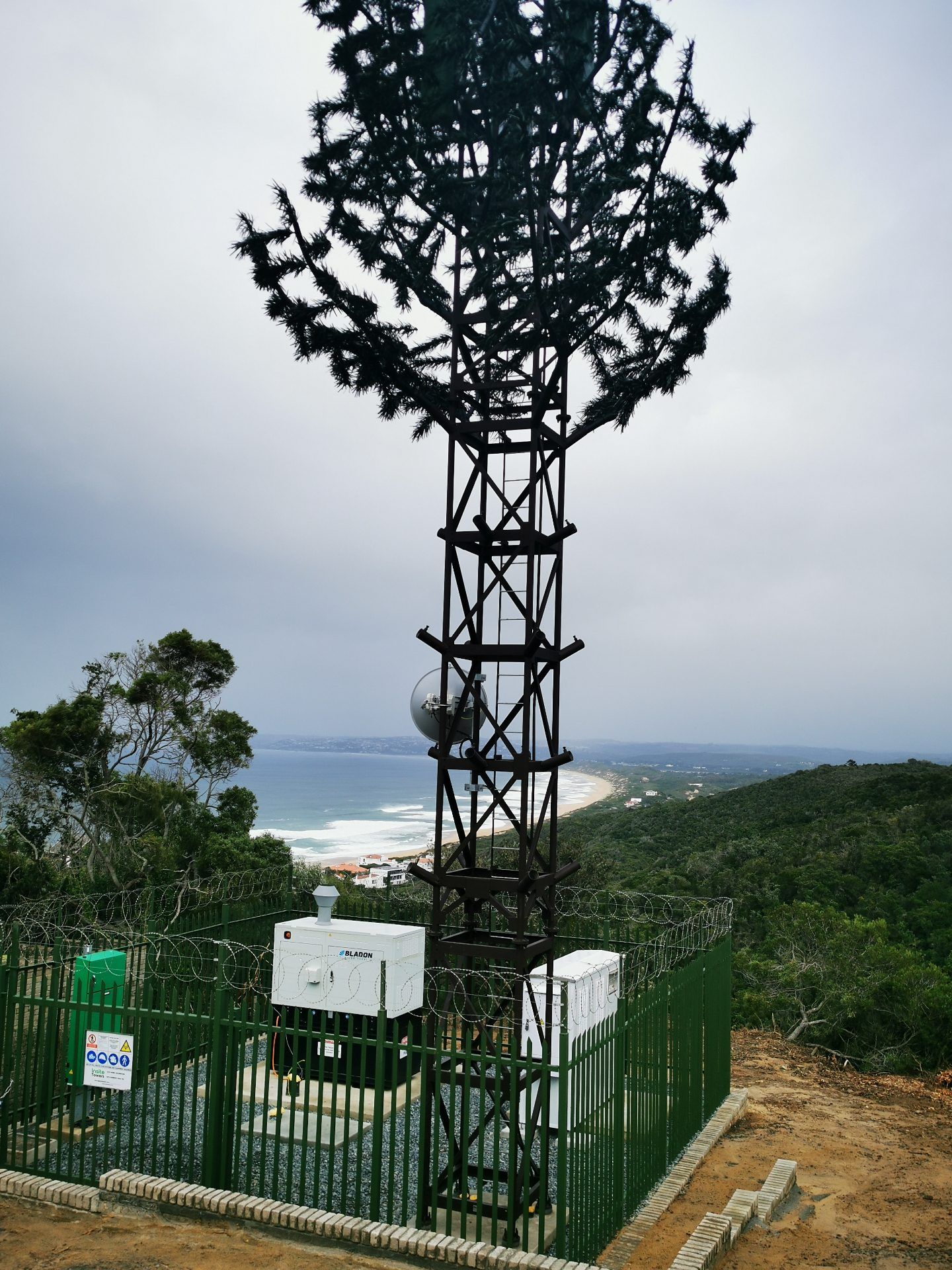
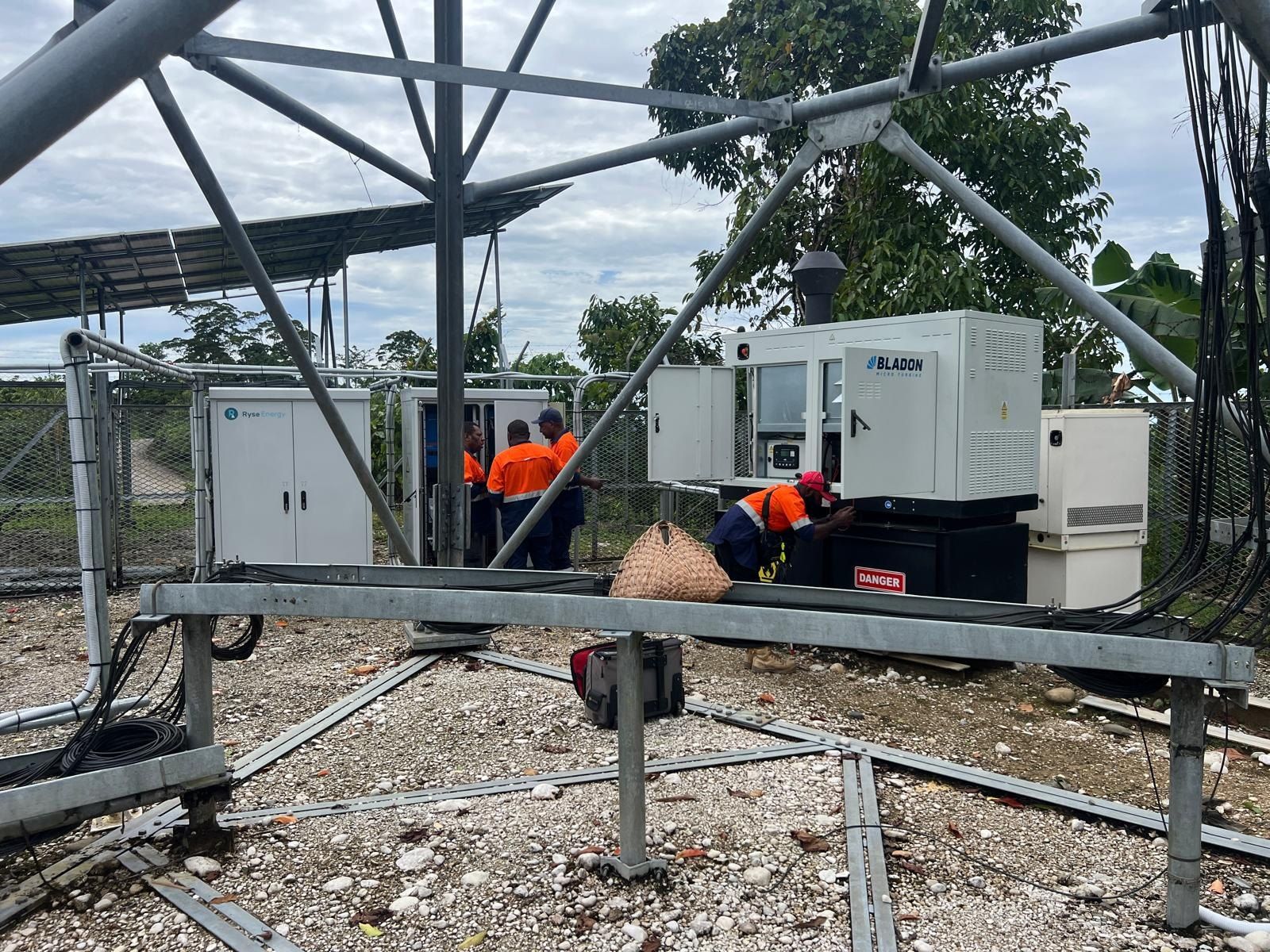
Measured operating results from live deployments, not projections. Each figure below comes from a documented site.
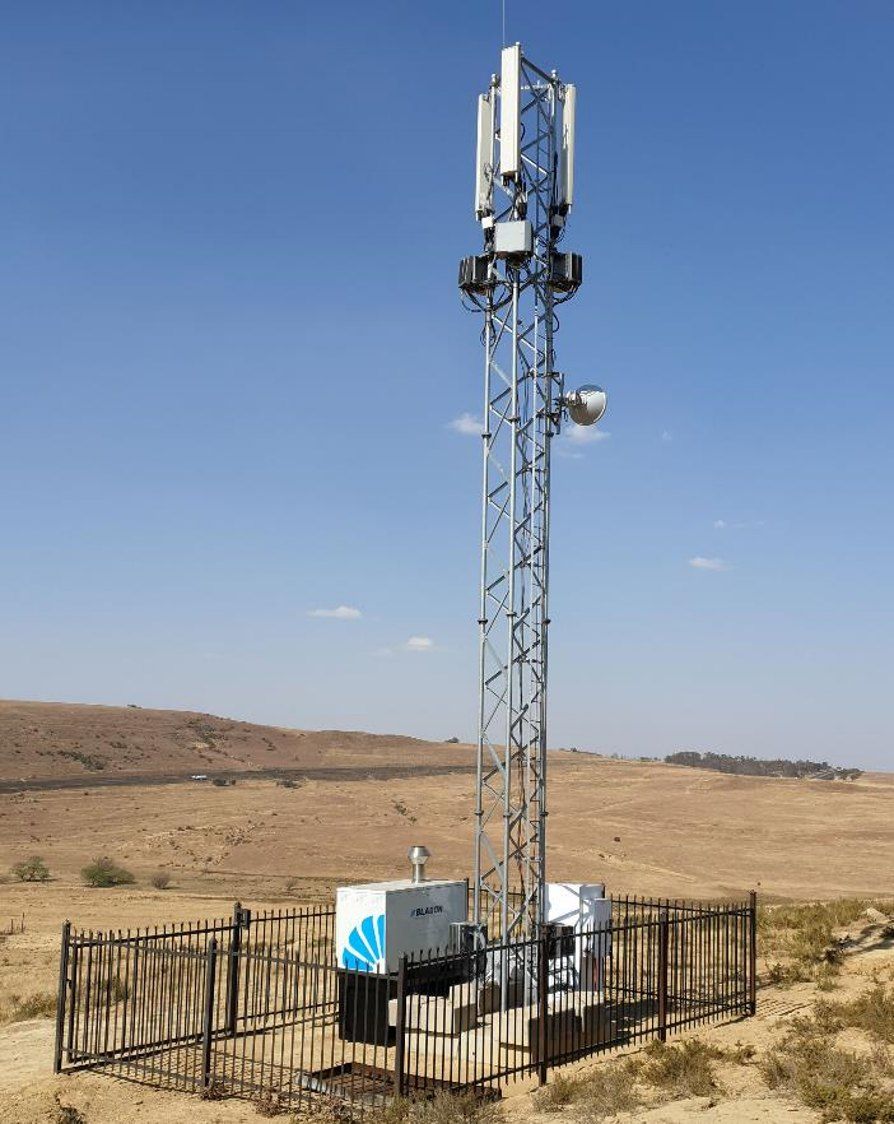
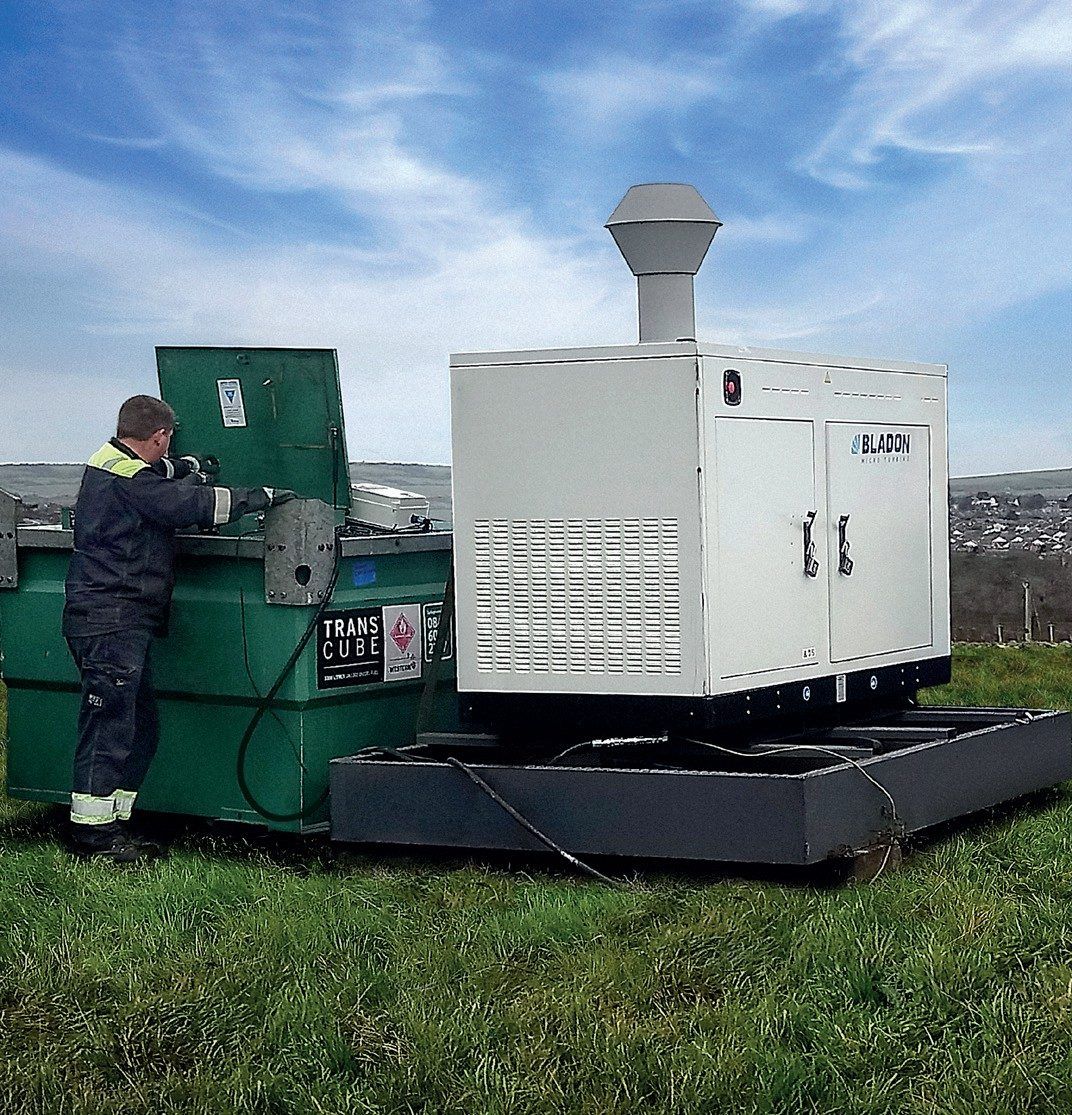

Model your fuel prices, run hours and service costs, or review the independent validation and field evidence behind these results.
A reciprocating engine needs a service visit roughly once a month because it has hundreds of wearing parts, oil and coolant. The microturbine has one moving part on air bearings, which is why it runs a year between visits and why it will burn whatever liquid fuel is cheapest at your site. 57 patents protect that, but the patents are the reason for the saving, not the pitch.
Buying the cheapest liquid fuel that reaches the site, rather than the one grade the engine will tolerate, is a direct line off the fuel bill. Bladon MTGs run diesel, kerosene, paraffin, HVO, FAME biofuel, and blends of these in any ratio without impacting performance - plus SAFs and eFUELs. Biogas, LPG, natural gas, flare gas, hydrogen, ethanol and bioethanol are in development, enabled by our modular combustor design.
Bladon designs, develops and manufactures Microturbine Gensets (MTG) in the UK for operators whose generator fleet is a recurring cost line rather than a one-off purchase. The MTG delivers practical primary power without the operating costs of a conventional diesel genset - and, as a consequence of how it burns fuel, without the noise and pollutants either.
It lowers monthly operating expenses and total cost of ownership against traditional diesel gensets, hybrid diesel gensets and fuel cells, and the gap is widest exactly where servicing is most expensive: off-grid and bad-grid sites.
Only one moving part with proven technology
Diesel, kerosene, paraffin, HVO, FAME biofuel, and blends of these in any ratio
One service visit per year
24/7 real-time monitoring included
Exceeds EU Stage V emissions limits
MTG12: 60 dB LPA at 10 m (50 dB LPA at 10 m with the optional Silent Pack). MTP40: 60 dB(A) at 7 m and 85 dB(A) at 1 m (design target, not yet verified by test)
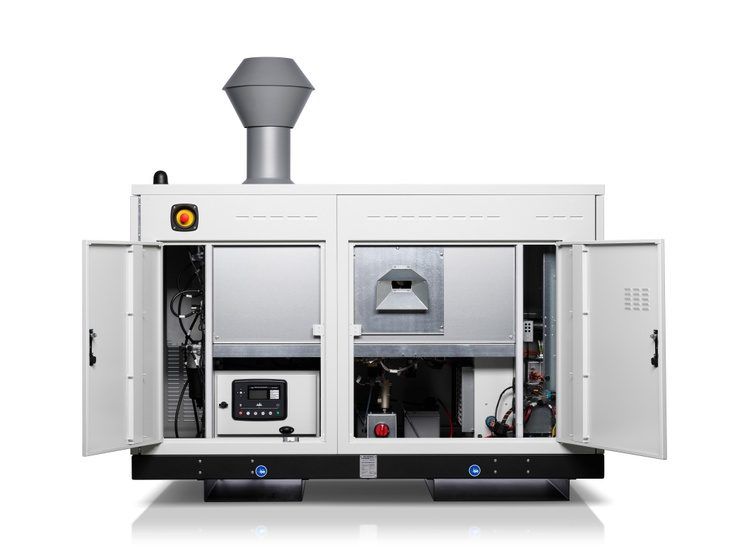
Microturbine Genset
Hours Lifetime
Take a behind-the-scenes look at Bladon's world-class manufacturing facility and see our microturbine technology in action.
02:53
Watch how our Bladon Microturbine is more reliable, reduces operating costs, is quieter and fuel flexible vs traditional DGs
One moving part with air bearing technology ensures high uptime, minimal wear, and a lifespan twice as long as a traditional DG.
One service visit per year, vs 12 for a diesel genset, with no engine oil or filters, cutting service costs by up to 90%.
On noise, the MTG12 runs at 60 dB LPA at 10 m, or 50 dB LPA at 10 m with the optional Silent Pack, and the MTP40 has a design target of 60 dB(A) at 7 m and 85 dB(A) at 1 m, not yet verified by test. Significantly quieter than diesel gensets, making it ideal for sensitive and urban environments.
Runs diesel, FAME biofuel, kerosene, paraffin or HVO, individually or blended. Cheaper fuels such as kerosene also have little black-market value, so far less of the delivered fuel is lost to theft.
Bladon Microturbine Genset vs diesel genset, line by line. Eight of these ten advantages show up directly in an operating budget.
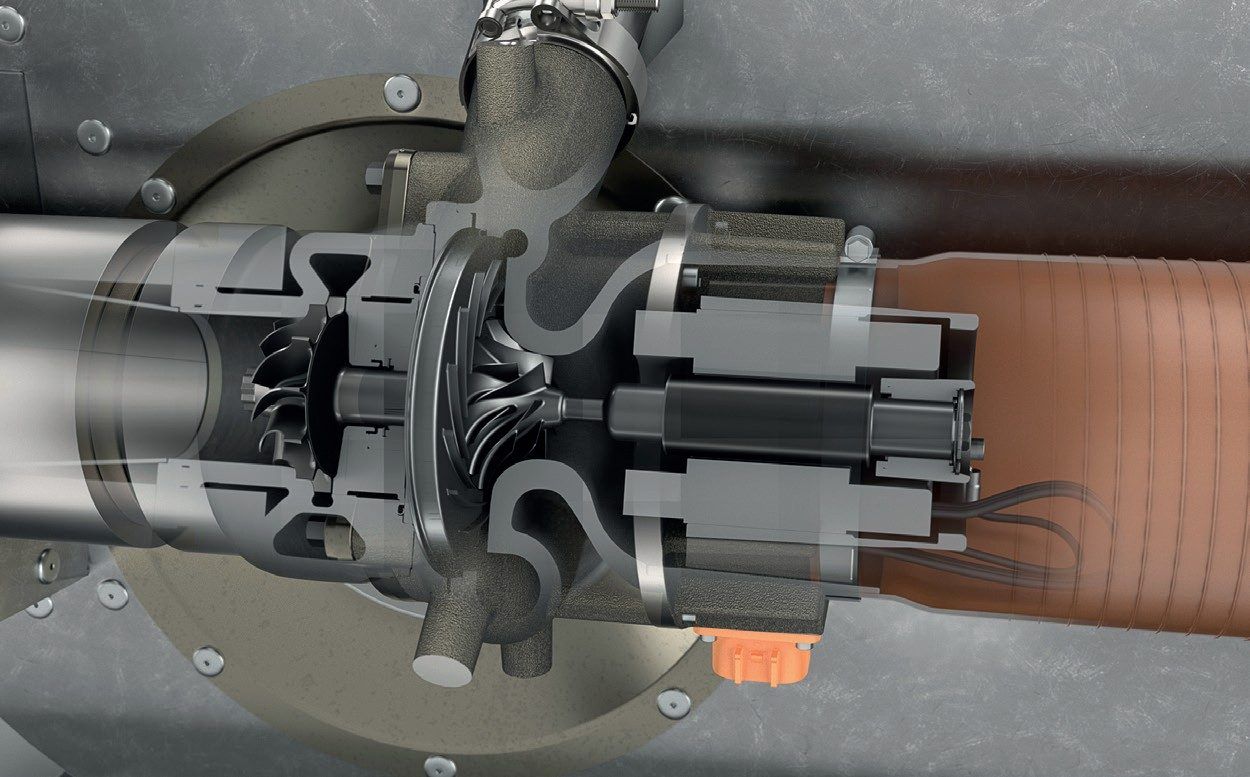
One service visit per year regardless of run hours
Once a month or 300 run hours
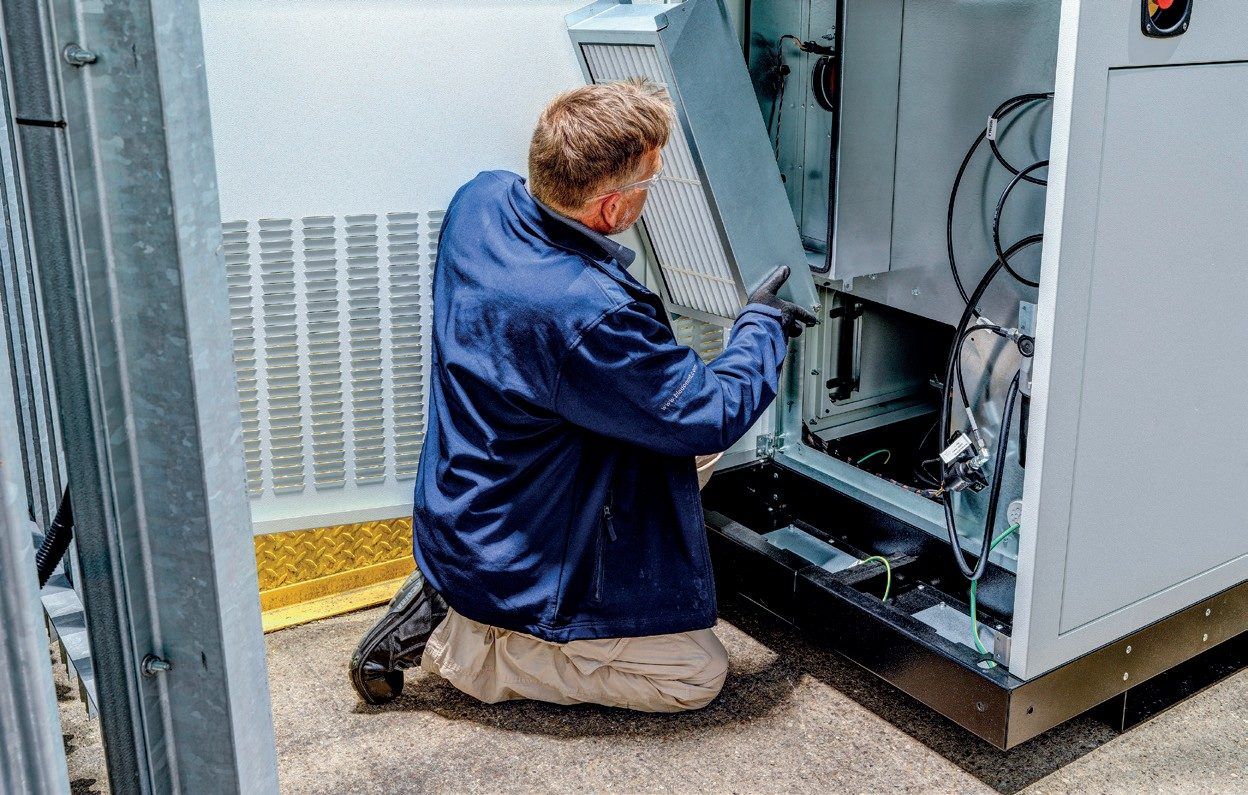
97% less CO, 97% less particulates, 33% less NOx. MTG12: 60 dB LPA at 10 m (50 dB LPA at 10 m with the optional Silent Pack). MTP40: 60 dB(A) at 7 m and 85 dB(A) at 1 m (design target, not yet verified by test)
High emissions, hazardous waste disposal required
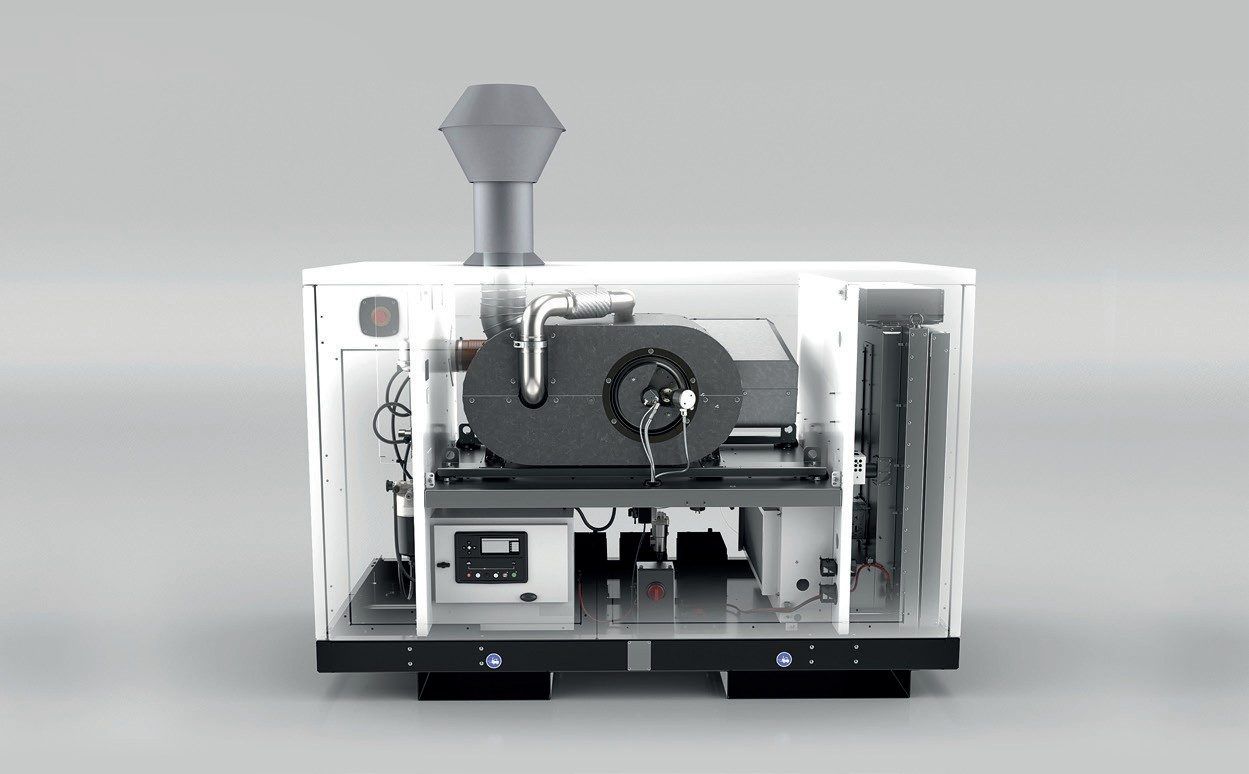
Patented Air Bearings with only one moving part, zero wear while operating
Multiple overhauls and major services required
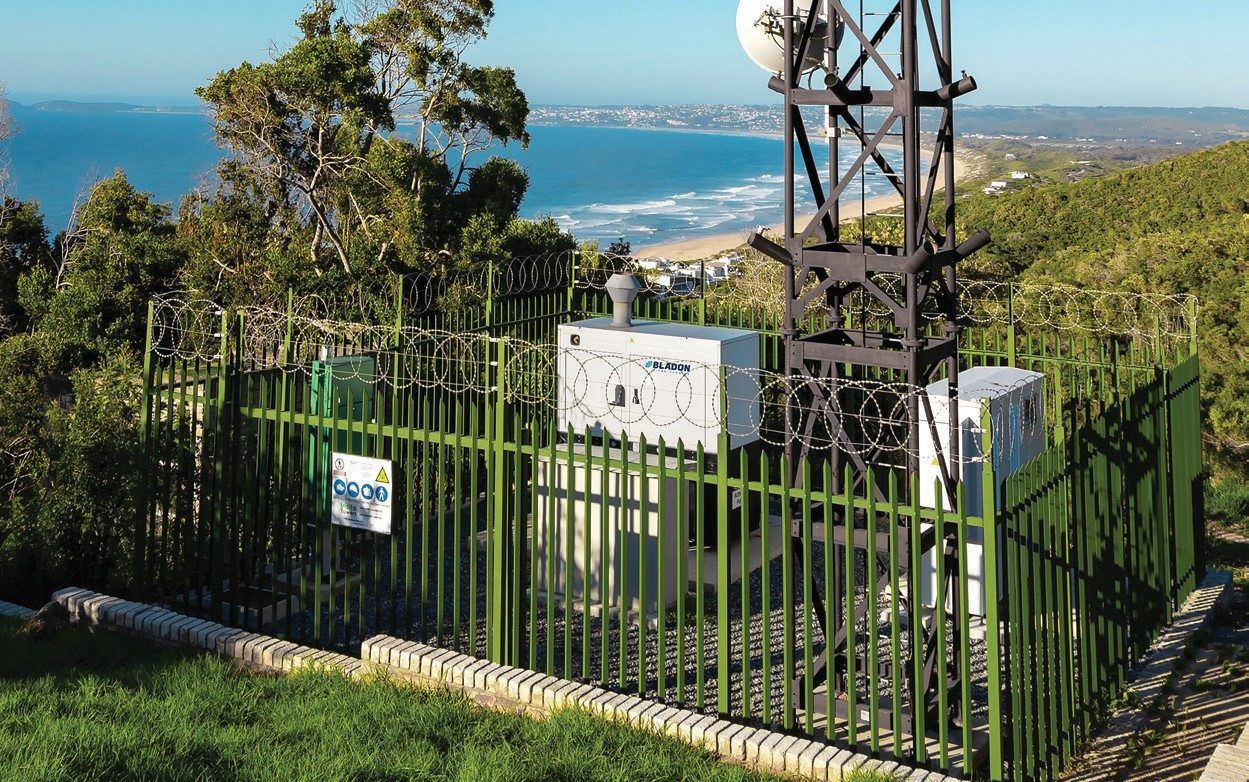
45,000 hours design life with non-stop operation for 8,760 hours
15,000 to 25,000 hours design life
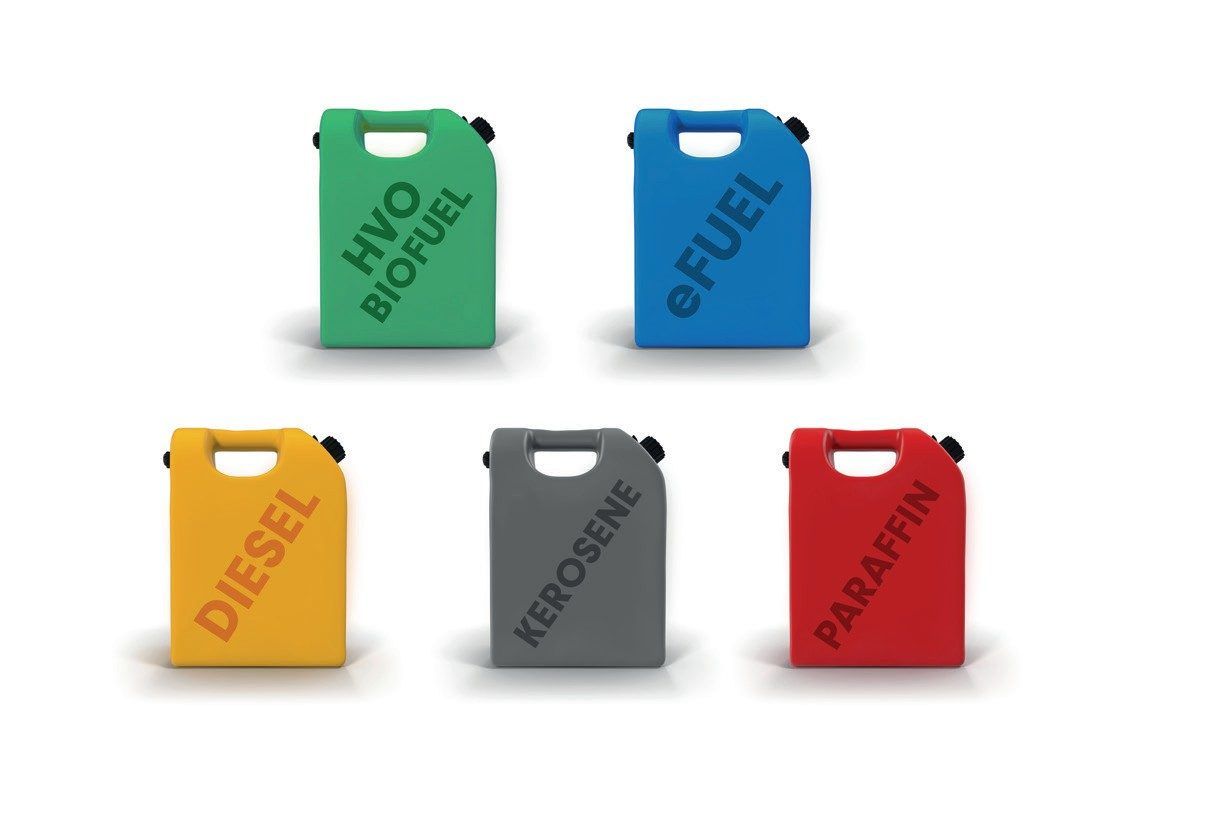
Run on diesel, kerosene, paraffin, HVO, FAME biofuel, and blends of these in any ratio without impacting performance, so the site can buy whichever fuel is cheapest
Can only run on diesel, at the diesel price
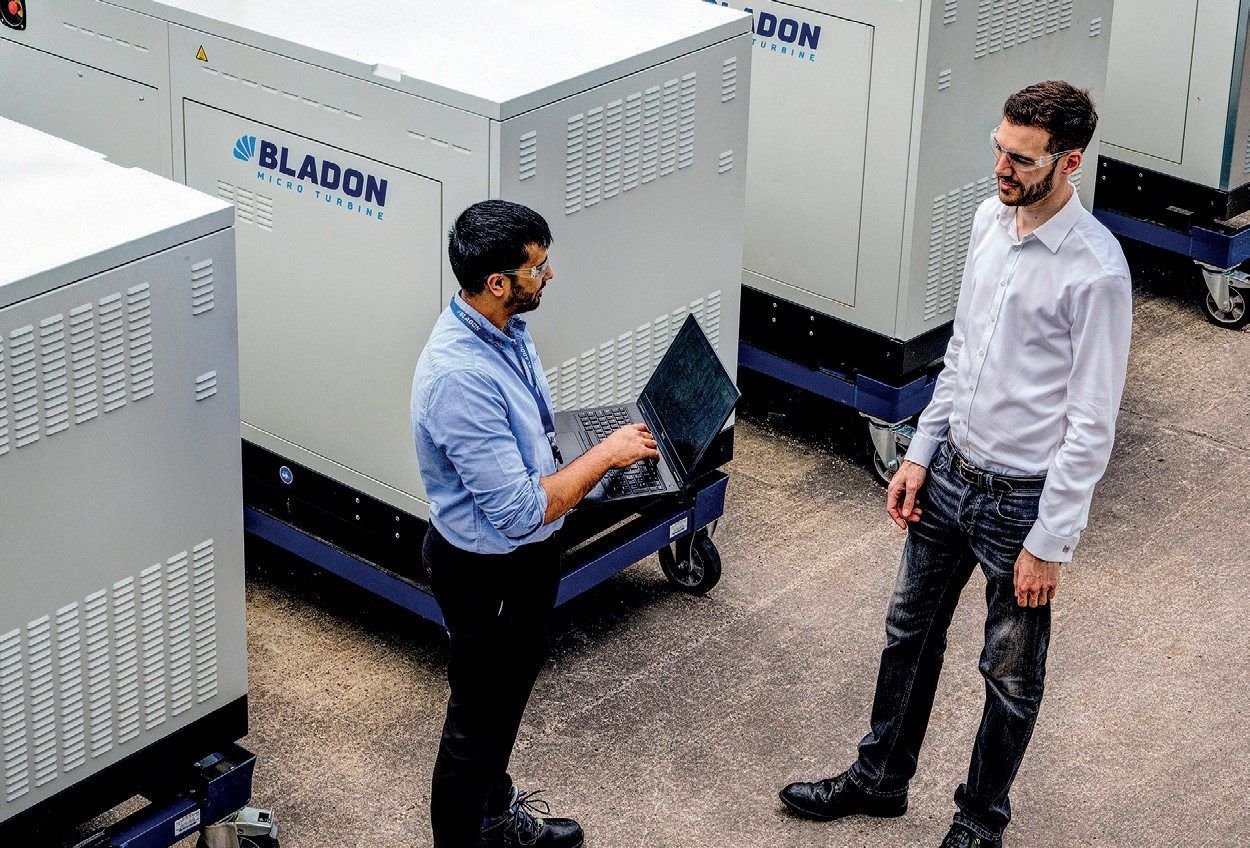
Remote monitoring with remote start/stop, automation and 24/7 real-time monitoring
Separate platform required, manual intervention needed
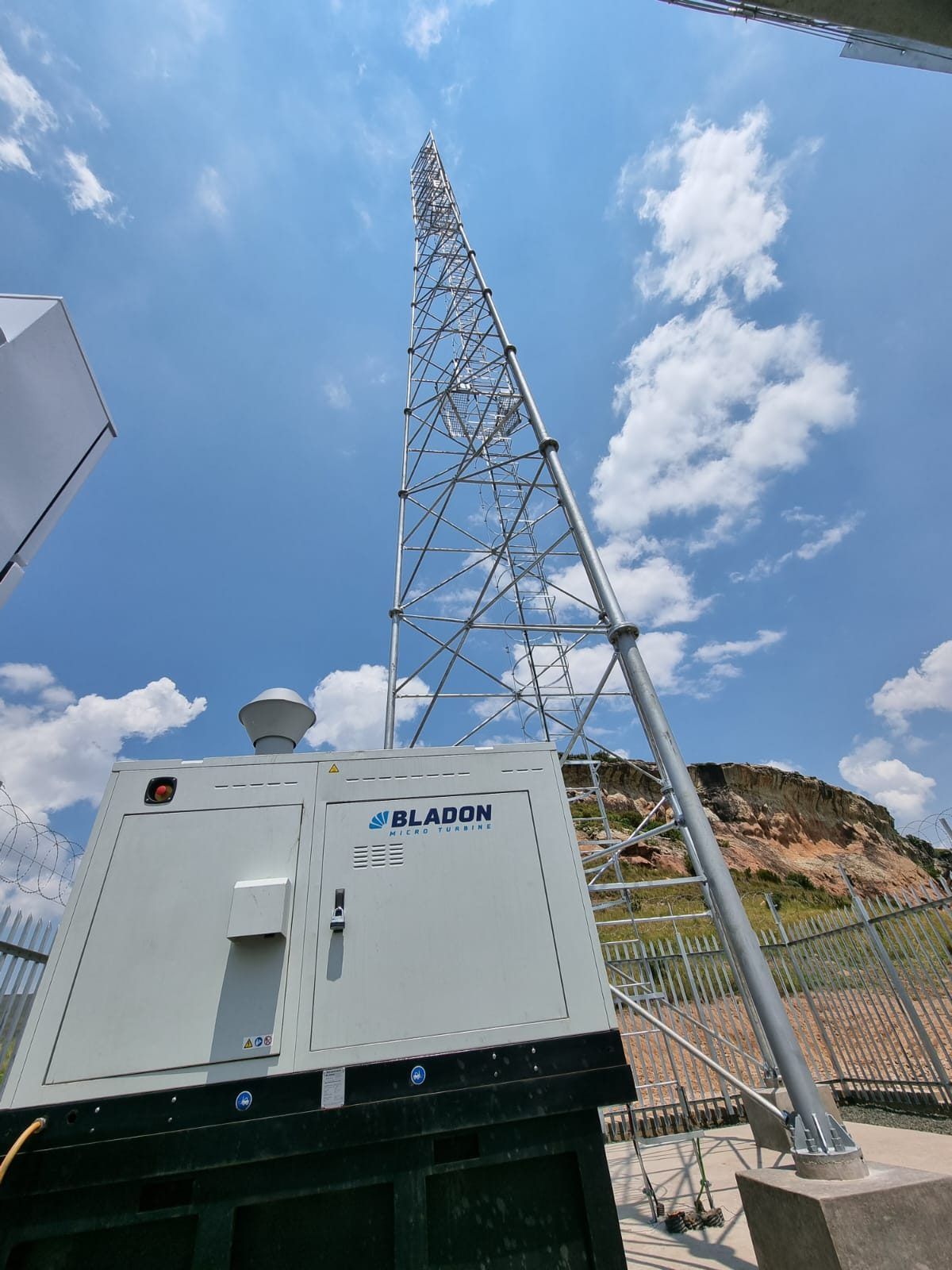
30 to 50 percent fuel cost saving because the unit runs cheaper fuels such as kerosene, plus minimal consumables and no engine oil. The MTG12 has no liquid coolant circuit; the MTP40 uses a sealed for life water glycol mix. Basis: brochure case studies. Switching a site from diesel to a kerosene and heating oil mix cut fuel cost by 35 percent, and a site with reduced fuel theft cut operating cost by 50 percent.
Diesel only, at the diesel price, with frequent maintenance costs
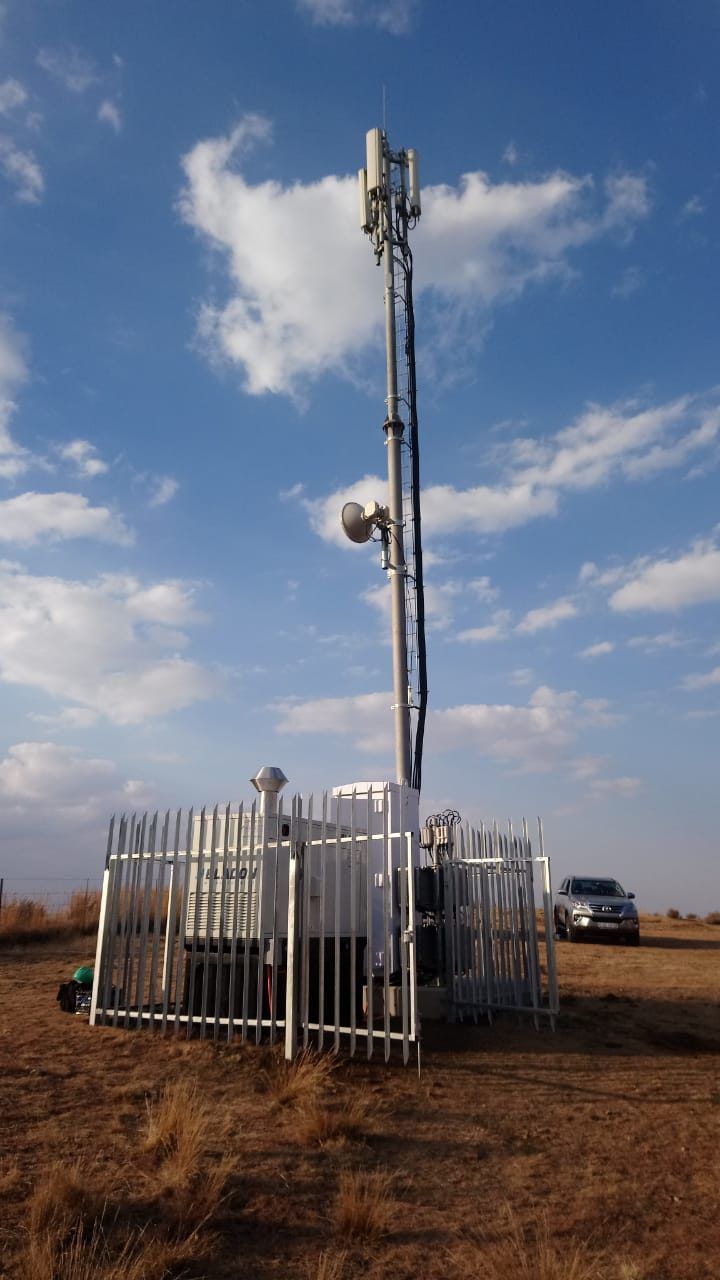
Stops fuel theft with a sealed system, and kerosene and blended fuels have little black-market resale value, which removes the incentive to siphon them
Vulnerable to fuel theft, high-value target
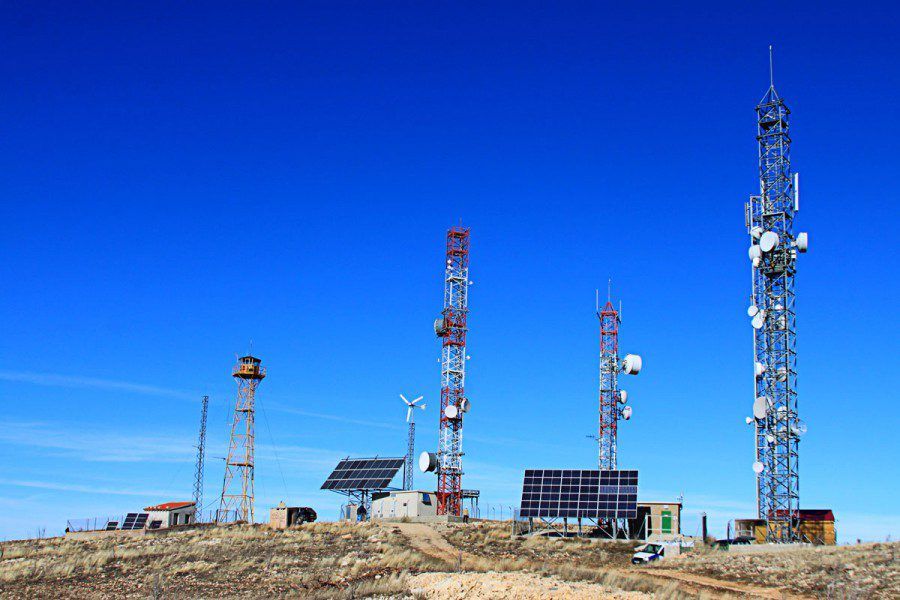
Compatible with solar and wind energy sources to increase autonomy
Not designed for hybrid operation
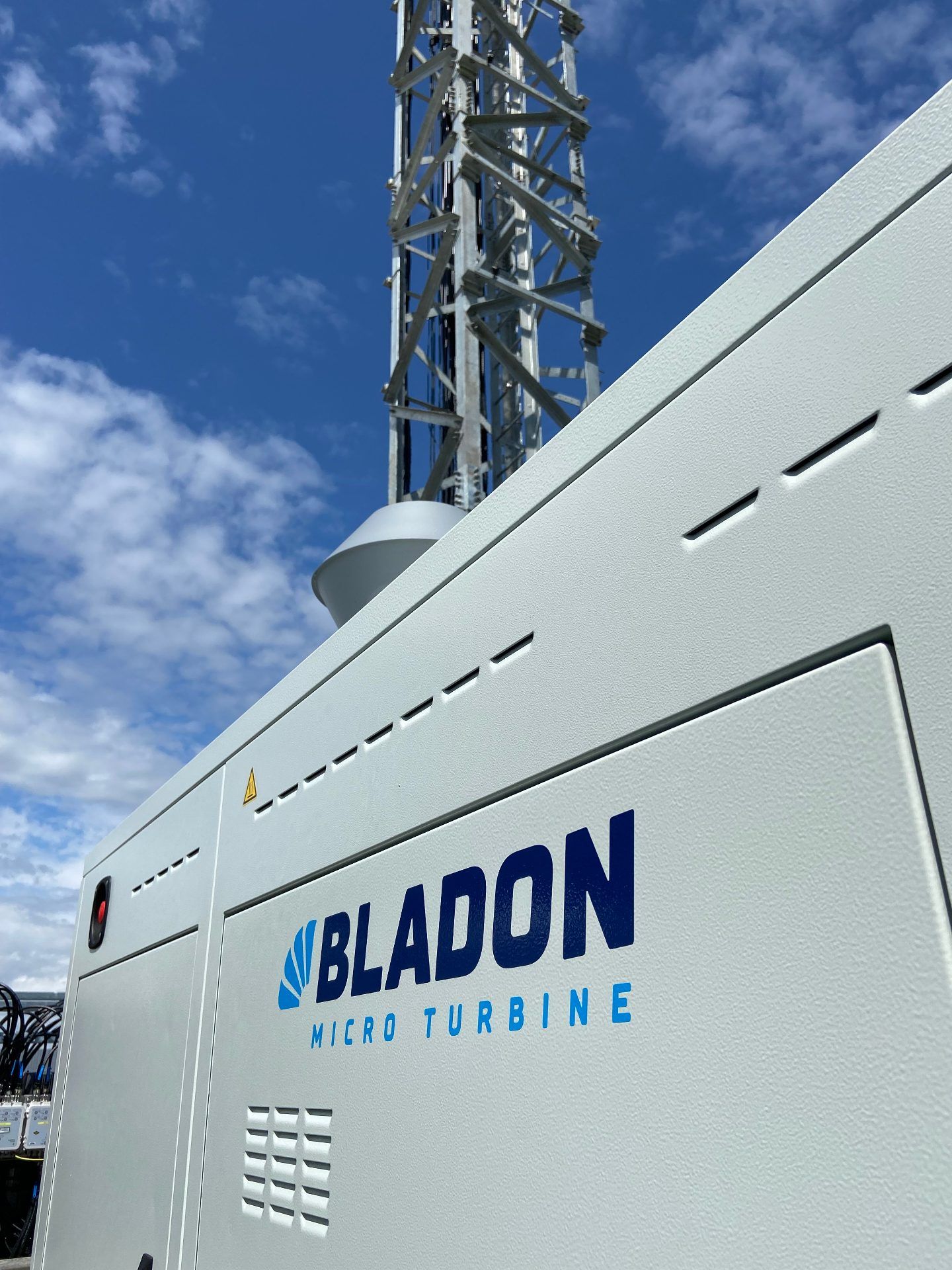
Global partner network, in-country technical support, 24/7 spare parts
Limited support network
32 kW prime, 44 kVA standby, 200% short circuit capability - the Bladon microturbine platform scaled up for multi-tenant tower sites, larger field camps and industrial three-phase loads. Same multi-fuel operation, one service visit per year, same 45,000 hours design life. Order books are open and delivery slots are being allocated now.
Two units on one platform. The MTG12 is in production - available now; the MTP40 adds 40 kVA three-phase output and is now available for pre-order. Both share the same multi-fuel operation, one service visit per year and 45,000 hours design life.
Prime Power
Moving Part
Less Emissions
Monitoring
Subject to the Cold Pack or Hot Pack kit, with output de-rating for altitude and temperature above ISO 8528 standard reference conditions.
Tower power is usually budgeted as a fuel line, because fuel is the part that is visible. The costs that move the total are the ones attached to sending a person to the site.
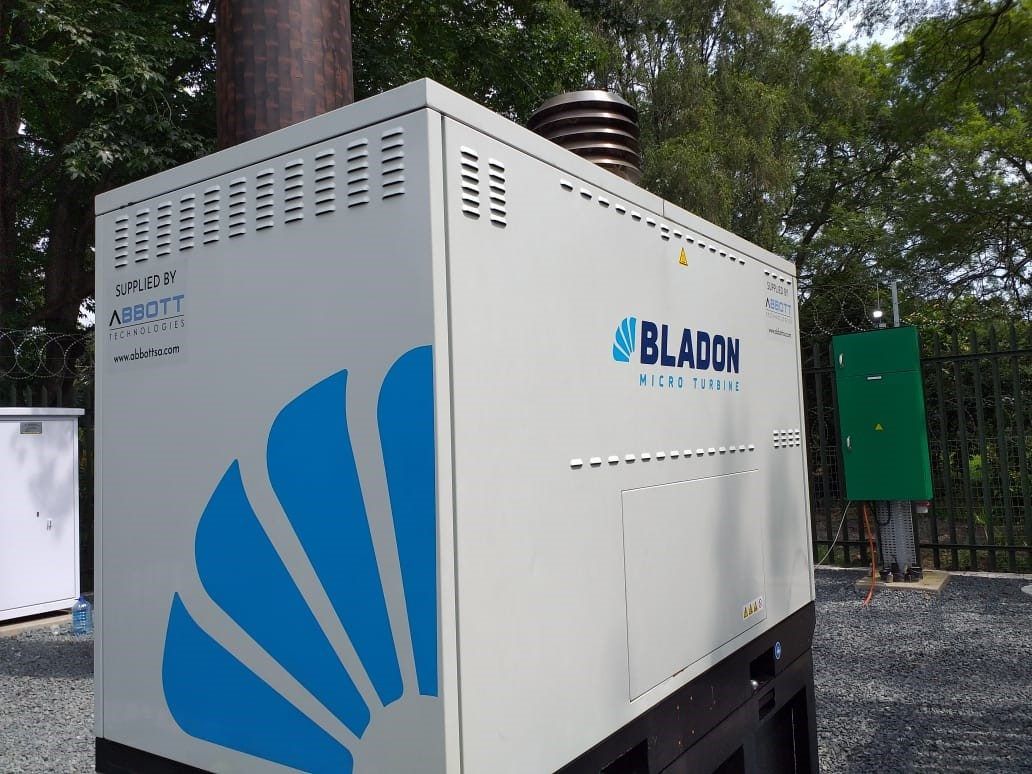
A defence power specification reads like a civil one on paper. The requirements that decide the outcome are the unwritten ones: acoustic signature, fuel logistics burden, and how many people have to touch the machine.
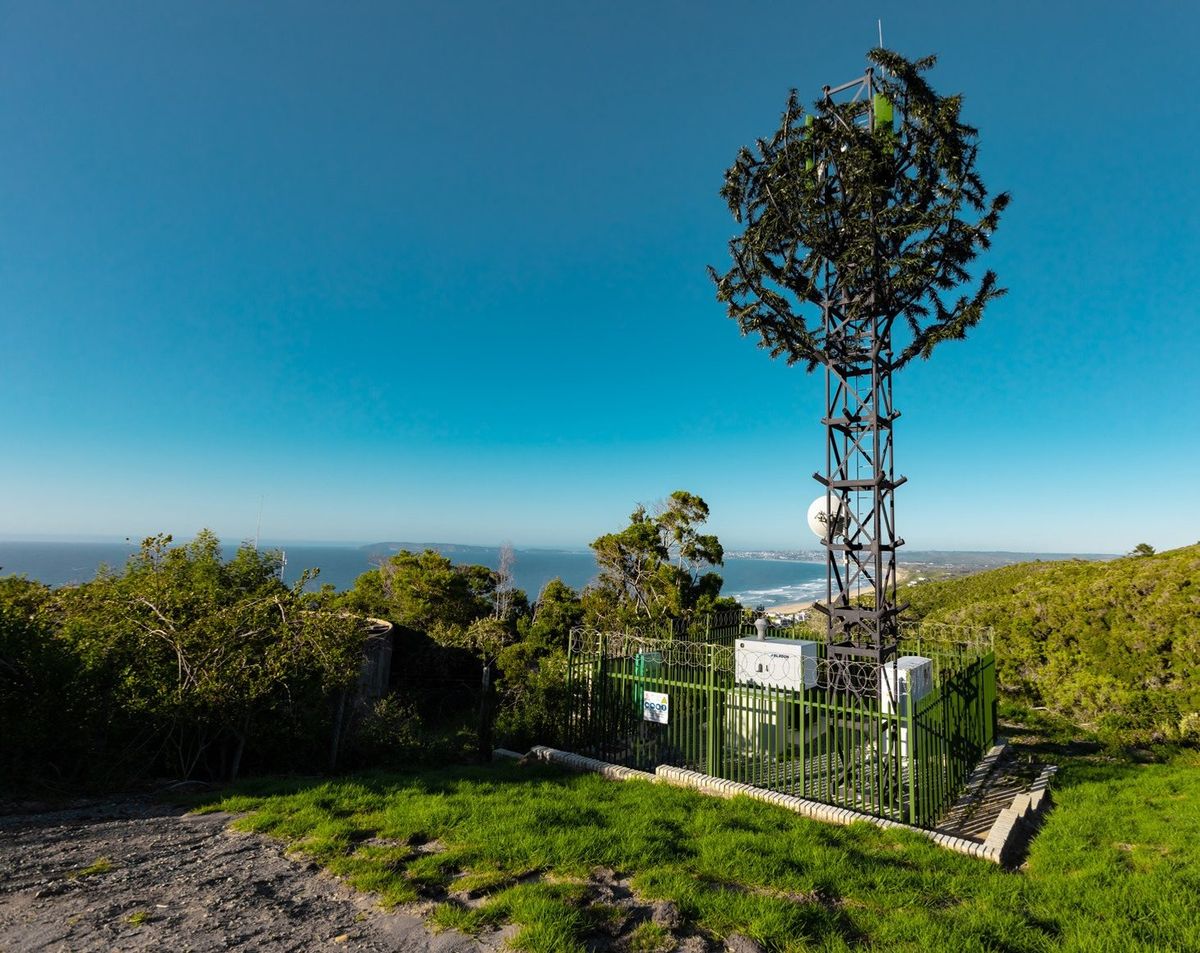
Bladon was named winner of the Vodafone Renewable Energy Challenge, recognising its microturbine technology for remote and off-grid power.
Ready to burn cleaner, reduce operating costs and reduce noise pollution? Contact our team to discuss your power requirements.
Unit 3 Spartan CloseWarwick, WarwickshireCV34 6NGUnited Kingdom